Why are my brakes squealing or grinding?
In a hurry? Start here.
Squealing can have several causes; grinding, reduced stopping power, or a soft pedal needs urgent attention.
Safety: If braking feels weak or unpredictable, stop safely and arrange a tow.
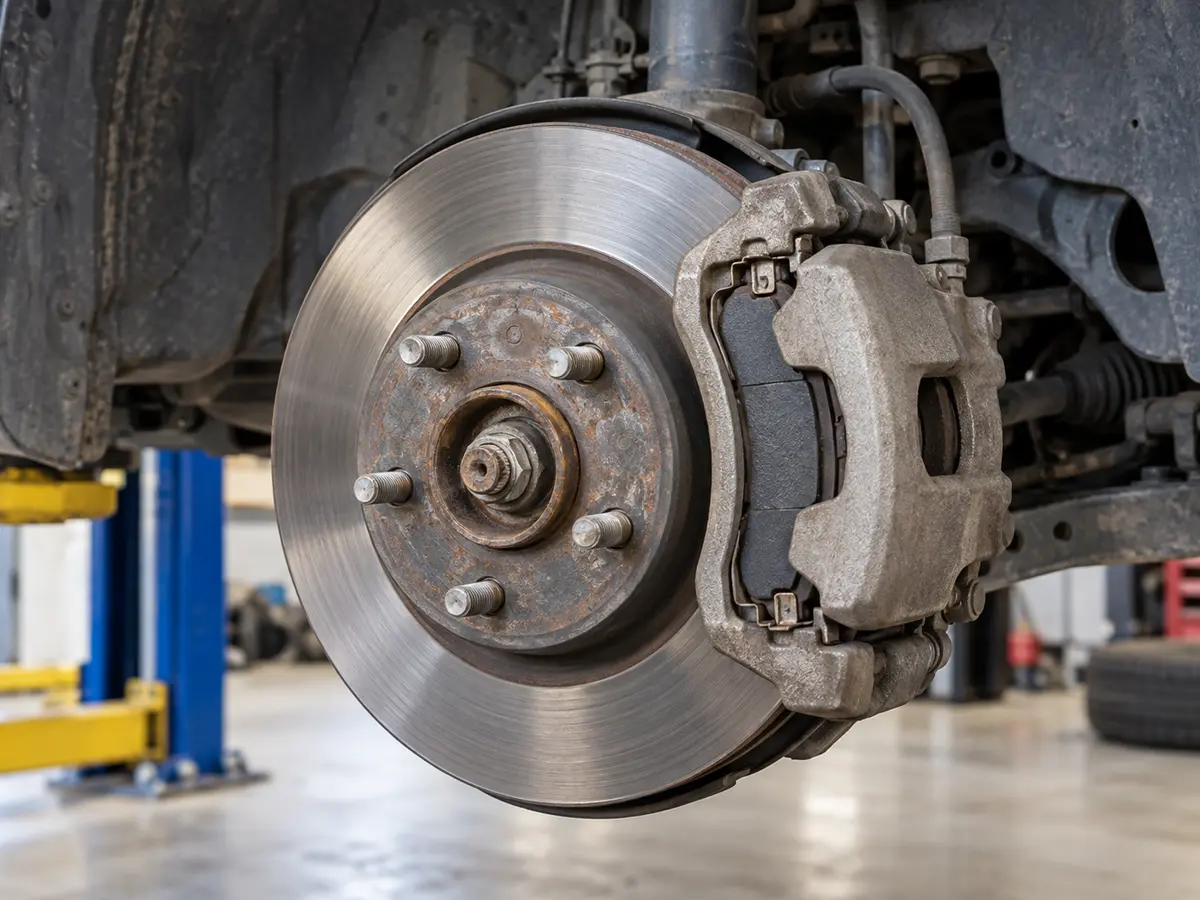
What the numbers point to
- The round metal disc is the brake rotor. A vibration or grinding sound does not prove it is the failed part.
- The caliper sits around the rotor and holds brake pads. Ask the shop to show the measured pad thickness and explain the diagnosis.
A photograph cannot establish that a brake is safe or worn. If braking is weak, unpredictable, or grinding, stop safely and seek inspection.
A brief squeak after rain can differ from a repeated squeal on every stop. Persistent squealing may reflect worn pads or hardware; grinding can mean metal contact. Vibration may come from brake components or other wheel and suspension issues.
Check the pattern
Note whether the sound happens only while braking, from which corner, whether the pedal feels soft or pulses, and whether stopping distance has changed. Do not crawl under a car supported only by a jack.
If braking power is reduced, the pedal sinks, a brake warning remains lit, or grinding is severe, stop safely and have the car towed.
Ask the shop
“What are the measured pad thicknesses and rotor condition at each wheel? Is there a leak or seized caliper?” Request photos or the measurements on the estimate.