Why won’t my car start?
In a hurry? Start here.
Notice whether the engine turns over, clicks, or stays silent. These clues separate battery and starter issues from an engine that cranks but will not run.
Safety: If you smell fuel or see smoke, stop trying to start it and seek help.
What the numbers point to
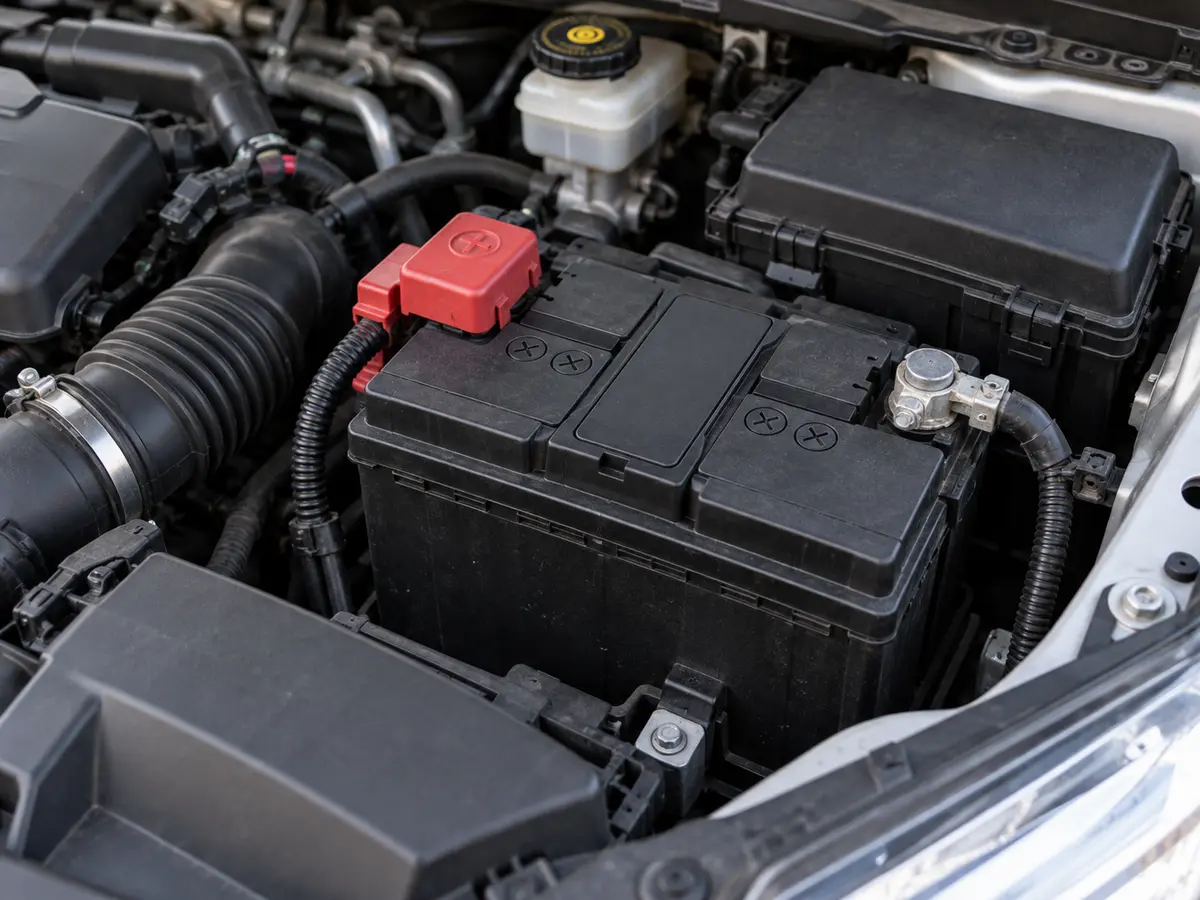
- The red cover marks the positive terminal in this example. Your battery may be in the trunk or under a seat; use the owner’s manual to locate it.
- The other terminal is visible at the right. Do not improvise a jump-start connection from this photo. Follow your manual’s procedure or request roadside assistance.
A battery is only one possible cause of a no-start problem. Listen for whether the engine cranks or clicks, then get the battery and charging system tested.
First notice what happens when you turn the key or press Start. Does the engine crank, click once, click rapidly, or stay silent? Those differences matter more than guessing at a part.
What the clues suggest
- Rapid clicks or dim lights: low battery charge or a poor battery connection is possible.
- One click with bright lights: the starter circuit may need testing, though battery and cable problems can mimic it.
- Engine cranks normally but will not fire: fuel, ignition, sensor, or anti-theft issues are possibilities.
- Starts with a jump and later dies: ask for a charging-system test as well as a battery test.
What to do first
Confirm the transmission is in Park or Neutral, check the fuel level, note any security warning, and look for loose or heavily corroded battery connections without touching damaged wiring. Follow your owner’s manual for any jump start.
If you smell fuel, see smoke, or the battery is swollen or leaking, stop attempting to start it and request help.
Ask the shop
“Can you test the battery under load, charging system, cable connections, and starter circuit before replacing anything?”