Why is my tire-pressure light on?
In a hurry? Start here.
Check all tires with a gauge when cold and inflate to the pressure on the driver-door label or in the manual, not the tire sidewall.
Safety: Do not drive on a visibly flat or badly damaged tire.
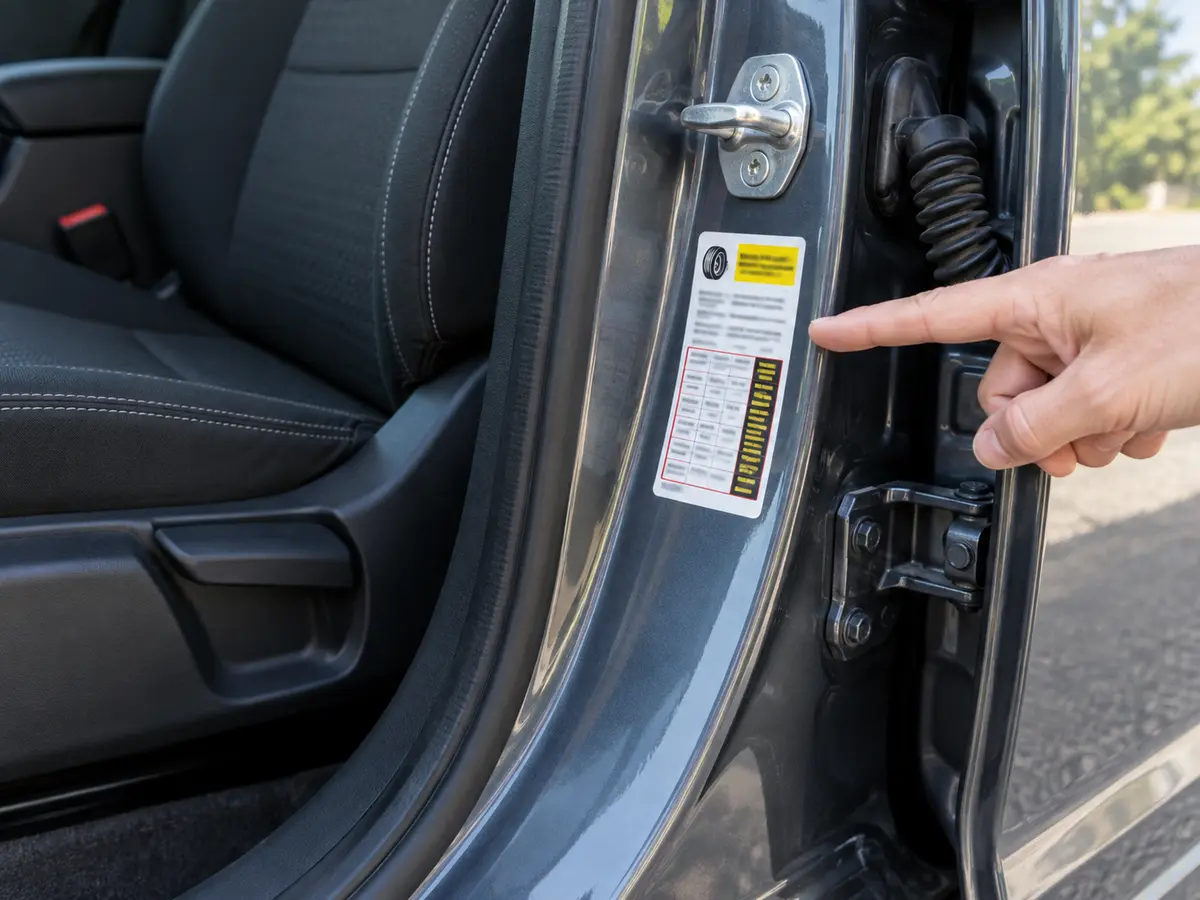
What the numbers point to
- Open the driver-side door and look at the door edge or pillar for a tire information label like this. Some vehicles place it elsewhere; check the manual.
- Read the recommended cold tire pressure for your specific vehicle. Check with a tire gauge when the tires are cold, then compare the reading. Do not use the tire sidewall’s maximum as your target.
The sample label in the photo is deliberately unreadable. Your own vehicle’s label supplies the number.
A low tire-pressure warning may follow a temperature drop or a slow leak. Visually inspect each tire, then measure pressure with a gauge when the tires are cold. Use the pressure on the driver-door placard or owner’s manual, not the maximum printed on the tire sidewall.
What to do
If one tire is much lower than the others, inspect for a nail or visible damage and have it checked for a puncture. Recheck pressure after inflation; a recurring warning needs diagnosis. A blinking light that stays on may indicate a monitoring-system fault on many vehicles.
If the tire is flat, visibly damaged, or the car pulls or handles poorly, stop safely. Do not continue driving on a flat tire.
Ask the shop
“Is the tire safely repairable, and did you check the valve and rim for leaks?”
Watch a fuller explanation
AAA: Tire Pressure 101 (YouTube)Shows where to find the correct pressure, how to measure it, and how to add air.