Why is my car overheating?
In a hurry? Start here.
A rising temperature gauge or steam means the engine may be overheating. Pull over safely, turn the engine off, and allow it to cool.
Safety: Never open a hot radiator or pressurized coolant cap.
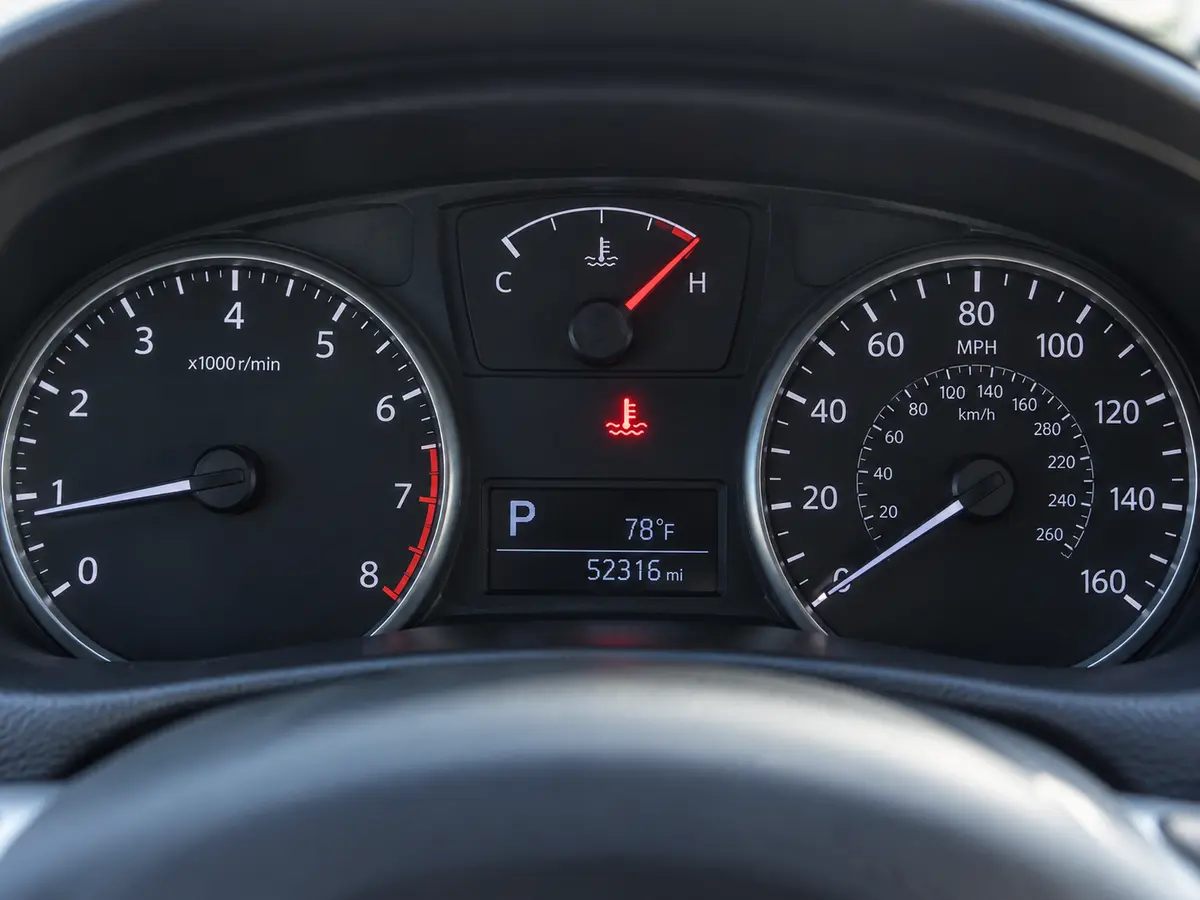
What the numbers point to
- The temperature needle is near H or the hot/red zone. Your car may use a digital warning instead of a gauge.
- The red thermometer symbol is another overheating warning. Pull over safely, shut off the engine, and arrange help.
Do not open a hot coolant cap. The picture illustrates warning signs; it cannot identify why a particular car overheated.
A climbing temperature gauge, overheating message, steam, or a sweet coolant smell can point to a cooling-system problem. Low coolant, a leak, fan, thermostat, water pump, or radiator issue may be involved; the symptom alone cannot identify which.
What to do now
Turn off the air conditioning, pull over as soon as it is safe, switch off the engine, and arrange assistance if the warning persists or steam appears. Let the engine cool completely before inspection.
Never open a hot radiator or coolant cap. Pressurized coolant can cause severe burns. Continuing to drive while overheating can damage the engine.
Ask the shop
“Where is coolant escaping, if at all? Can you pressure-test the system and check fan operation and the thermostat?”